Seeing your cat throw up white foam can be worrying for any pet owner. In many cases, white foamy vomit happens when a cat vomits on an empty stomach due to mild digestive irritation. However, if your cat throws up white foam frequently, it may be a sign of an underlying health issue that needs veterinary attention.
Understanding why this happens can help you decide whether simple care at home is enough or if it is time to call the vet.
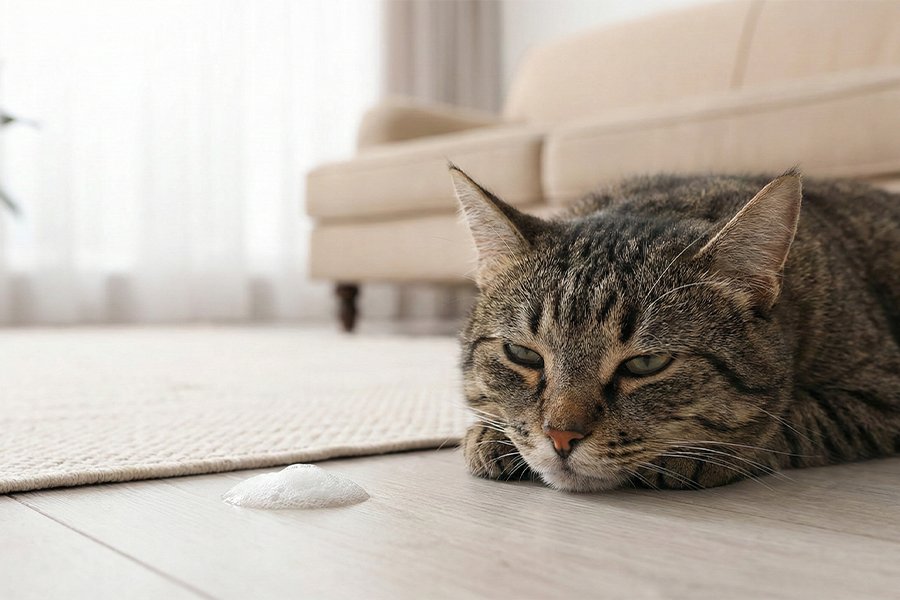
Seeing your cat throw up white foam can be worrying for any pet owner. In many cases, white foamy vomit happens when a cat vomits on an empty stomach due to mild digestive irritation. However, if your cat frequently throws up white foam, it may be a sign of an underlying health issue that requires veterinary attention.
Understanding why this happens can help you decide whether simple care at home is enough or if it is time to call the vet.
Below are the most common medical and non-medical reasons a cat may throw up white foam.
Cats produce stomach acid to digest food. If a cat skips meals, eats late, or goes too long without food, excess acid can irritate the stomach lining. This irritation often causes a cat to throw up white or slightly yellow foam.
This type of vomiting commonly happens early in the morning or between meals. Feeding smaller meals more often and keeping a consistent feeding schedule can help reduce stomach acid buildup and prevent white foam vomiting.
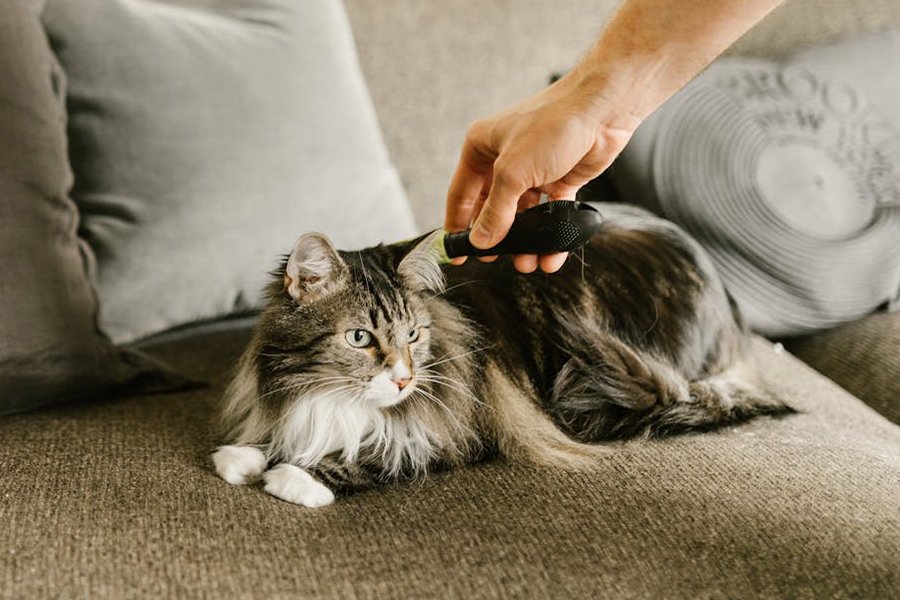
Hairballs are a very common cause of cats vomiting white foam. While grooming, cats swallow loose fur. Sometimes the fur builds up in the stomach instead of passing through the digestive system.
When a hairball is forming but has not yet come up, your cat may vomit white foam first. Regular brushing, hairball-control food, and vet-approved hairball supplements can help prevent this problem.
Gastritis happens when the stomach lining becomes inflamed. This can occur after eating spoiled food, plants, chemicals, or foreign objects such as string or plastic.
Cats with gastritis may throw up white foam along with bile or small amounts of blood. Other symptoms include low energy, poor appetite, dehydration, and stomach discomfort. Veterinary care is important to identify the cause and begin proper treatment.
Inflammatory bowel disease is a chronic condition that affects a cat’s digestive tract. Cats with IBD often experience frequent vomiting, diarrhea, weight loss, and reduced appetite.
If your cat throws up white foam regularly and has ongoing digestive issues, your veterinarian may suggest blood tests, imaging, or diet trials to confirm IBD and create a long-term management plan.
Diabetes can cause vomiting due to changes in how the body processes sugar. Cats with diabetes often drink more water, urinate more frequently, lose weight, and become dehydrated.
If your cat throws up white foam and shows these symptoms, prompt veterinary care is essential. Treatment may include insulin therapy, diet changes, or both.
Pancreatitis is an inflammation of the pancreas that can be either sudden or long-term. It often occurs along with other conditions such as liver disease or diabetes.
Cats with pancreatitis may vomit white foam and appear tired, stop eating, develop abdominal pain, or show signs of fever or jaundice. Treatment typically includes fluids, medication, and supportive care provided by a veterinarian.
Liver disease can cause nausea and vomiting in cats. Signs may include vomiting, loss of appetite, weight loss, and yellowing of the eyes or skin.
Although liver disease cannot be cured, early diagnosis allows symptoms to be managed through medication and proper nutrition.
Chronic kidney disease is common in older cats. Vomiting white foam may happen because toxins build up in the body when the kidneys are not working properly.
Other signs include increased thirst, changes in urination, poor coat condition, weakness, and dehydration. While kidney disease is not curable, veterinary care can greatly improve a cat’s comfort and quality of life.
Hyperthyroidism occurs when the thyroid gland produces too much hormone, usually in senior cats. Symptoms include vomiting, weight loss despite increased appetite, diarrhea, excessive vocalization, and increased urination.
Blood tests can confirm this condition, and treatment options include medication, prescription diets, or radioiodine therapy.
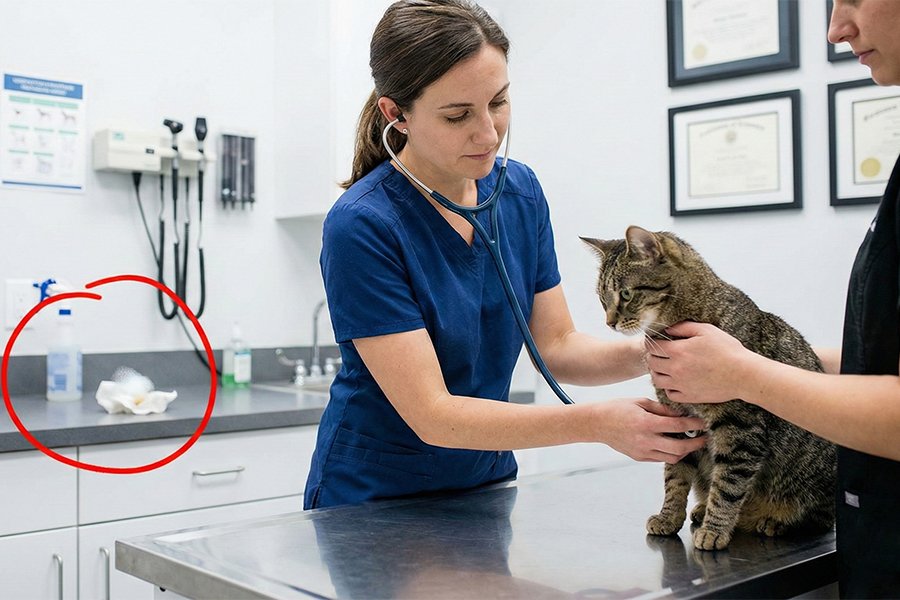
It is not normal for a cat to vomit frequently. Contact your veterinarian if:
Early veterinary care can prevent serious complications and help your cat recover faster.
Many cat owners wonder whether it is normal when they see their cat throw up white foam. The answer depends on how often it happens and whether other symptoms are present.
An occasional episode of white foam vomiting may not be serious, especially if your cat skipped a meal or has mild indigestion. However, if your cat throws up white foam regularly, it is not considered normal. Frequent vomiting usually means the digestive system is irritated or there is an underlying medical condition.
If vomiting becomes a pattern rather than a rare event, veterinary evaluation is strongly recommended.
Sometimes a cat may throw up white foam and then behave normally afterward. This can make pet owners unsure about whether to worry.
In many cases, cats act normal after vomiting because the irritation temporarily passes. However, this does not always mean the problem is resolved. Some conditions, such as early kidney disease, mild gastritis, or hairball buildup, may not show obvious symptoms right away.
If your cat continues to eat, drink, and play normally but keeps throwing up white foam, you should monitor the situation closely for 24 to 48 hours and contact your veterinarian if vomiting continues.
The color and texture of your cat’s vomit can offer important clues about the cause.
While color alone cannot confirm a diagnosis, changes in vomit appearance should always be noted and shared with your veterinarian.
Many cats throw up white foam early in the morning. This often happens because the stomach has been empty overnight, allowing acid to build up.
Morning vomiting is commonly linked to hunger-related nausea rather than serious illness. Feeding a small meal late at night or offering a scheduled early-morning meal can help prevent this type of vomiting.
If morning vomiting continues despite feeding changes, further evaluation may be necessary.
If your cat throws up white foam once and seems otherwise healthy, you can take a few safe steps at home:
Do not give any medication or home remedies without veterinary guidance.
Certain actions can make the problem worse:
These actions can increase stomach irritation or cause serious complications.
Seek immediate veterinary care if your cat throws up white foam and shows any of the following signs:
These symptoms may indicate a medical emergency.
To determine why a cat throws up white foam, veterinarians may use:
These tests help identify infections, organ disease, parasites, or digestive disorders.
Treatment depends on the underlying problem and may include:
Early treatment usually leads to better outcomes and faster relief.
While not all causes can be prevented, these steps can reduce risk:
Prevention plays a key role in long-term digestive health.
Early treatment usually leads to better outcomes and faster relief.
Q1: How often is vomiting too often for cats?
Vomiting more than once a week or repeatedly in a short time is not normal.
Q2: Can stress cause white foam vomiting in cats?
Yes, stress and anxiety can irritate the digestive system.
Q3: Should I change my cat’s food if it vomits white foam?
Only change food under veterinary guidance to avoid worsening symptoms.

WRITTEN BY
Md Hazrat Ali
A passionate pet blogger
and SEO content writer
At LovelyCatStore.com, some links are affiliate links. If you buy through them, we may earn a small commission at no extra cost to you. We participate in the Amazon Services LLC Associates Program, which helps us earn by linking to Amazon.com and related sites. Read more here…