Why your cat is losing hair is a common concern for many pet owners and often indicates an underlying health or lifestyle problem. Allergies, parasites, stress, hormonal imbalances, or poor nutrition can cause hair loss in cats. In this blog, you’ll learn the main causes, symptoms, and effective solutions to help stop your cat’s hair loss and keep their coat healthy.
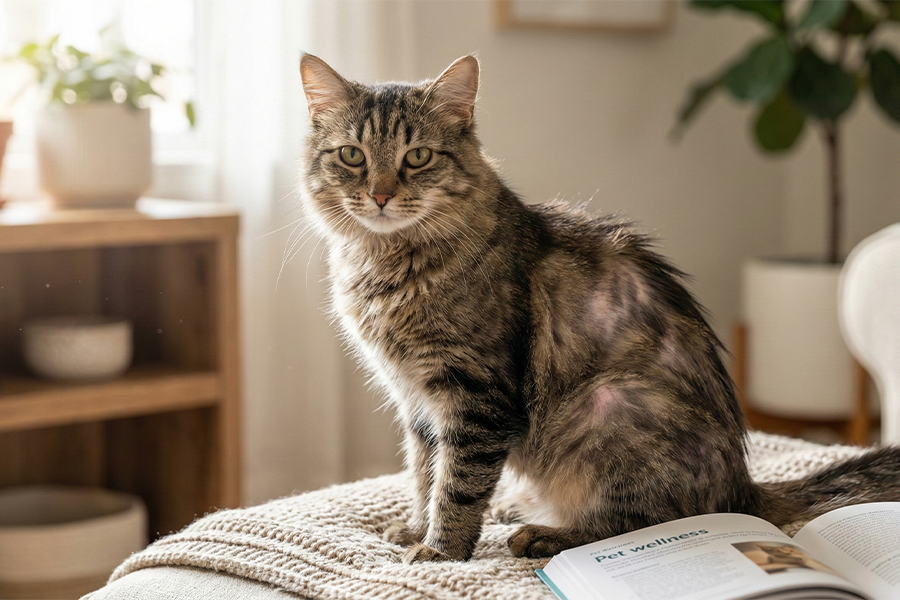
Hair loss in cats is referred to as alopecia. Alopecia means your cat is losing fur from one area or multiple areas, and sometimes the skin becomes visible. Alopecia can happen to any cat, including indoor cats. It does not always mean a serious disease, but it always means there is a reason behind it.
Sometimes the skin under the missing fur looks normal. Sometimes it looks red, flaky, swollen, or irritated. Alopecia is usually a symptom, not a disease by itself. That is why the question Why Your Cat is Losing Hair has more than one possible answer. The real cause can be parasites, allergies, infections, stress, pain, diet problems, or internal health issues.
Cats shed every day. This is normal. Normal shedding usually happens evenly across the body. You may see more hair on the bed or sofa, especially during seasonal changes. But you do not usually see clear bald spots, and the skin looks healthy.
Hair loss is different. Hair loss creates visible thinning fur, patchy fur, or bald patches. The coat may look uneven, and some areas may look like the hair is broken. Many cats with hair loss also lick, scratch, or chew their fur more than normal. If you are repeatedly asking “Why Your Cat is Losing Hair” and you see bald spots or irritated skin, it is likely more than normal shedding.
Hair loss in cats often happens because of skin irritation plus extra licking or scratching. Below are the most common causes in a clear and simple way.
Fleas are one of the most common reasons for cat hair loss. Even if you do not see fleas, fleas can still be present. Some cats are very sensitive to flea saliva. Even one flea bite can cause strong itching. This problem is often called flea allergy dermatitis.
When your cat feels itchy, your cat scratches and licks a lot. Over time, this causes scabs, hair breakage, and bald patches. Hair loss from fleas often appears near the base of the tail and lower back. Your cat may look restless and may groom more than usual. Fleas multiply fast, so early control is important.
Besides fleas, mites can also lead to hair loss in cats. Mites irritate the skin, causing itching, which leads to scratching and overgrooming. In some cases, mite infestations result in crusty skin, dandruff-like flakes, and small scabs. Since mites can be difficult to confirm at home, a veterinary check is often necessary.
Looks very itchy, and hair loss is spreading; parasites should be one of the first things to consider when you ask Why Your Cat is Losing Hair.
For more tips on keeping your cat comfortable and healthy, including preventing skin issues, check out our guide on how to take care of a kitty.
Besides fleas, mites can also cause hair loss in cats. Mites irritate the skin and cause itching. This leads to scratching and overgrooming. Some mite problems cause crusty skin, dandruff-like flakes, and small scabs. Because mites are hard to confirm at home, a veterinary check may be needed.
If your cat is itchy and experiencing widespread hair loss, parasites should be one of the first things to consider when wondering why your cat is losing hair.
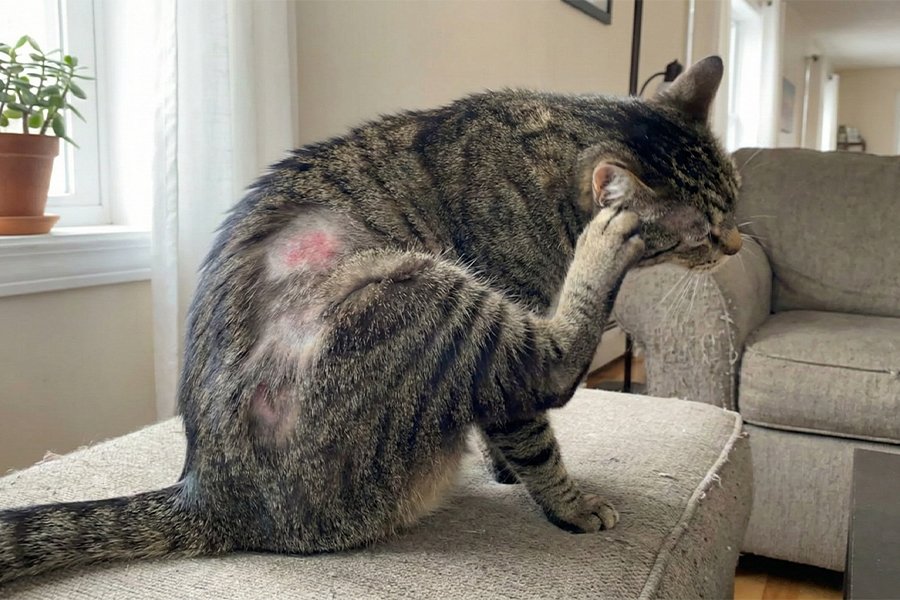
Allergies are another very common cause of bald patches on cats. Allergies often cause itching. When itching continues, your cat licks and scratches more, and hair falls out.
Food allergies can happen even if your cat has been eating the same food for a long time. Cats can become allergic to common ingredients such as chicken, fish, beef, dairy, or some grains. Food allergy signs can include skin irritation, hair loss on the belly and legs, and ear problems.
Environmental allergies can also cause thinning of the cat’s fur. Cats can react to dust, pollen, mold, cigarette smoke, strong perfumes, and cleaning products. If your cat experiences repeated skin flare-ups that improve but then recur, allergies may be a significant contributing factor.
If your cat is itchy and experiencing widespread hair loss, parasites should be one of the first things to consider when wondering why your cat is losing hair.
Overgrooming means your cat grooms too much and too often, usually in the same areas. A cat tongue has tiny rough barbs. These barbs can break hair and irritate skin. When licking becomes excessive, it can create smooth bald patches, especially on the belly, inner thighs, and sides.
Overgrooming is not always a habit. Overgrooming is often linked to allergies, stress, pain, fleas, or skin irritation.
That is why you should pay attention to your cat’s grooming behavior when trying to understand why your cat is losing hair.
Stress is a common and often ignored cause of cat hair loss. Cats like routine. Sudden changes can make cats anxious. A stressed cat may lick the body to self-soothe. Over time, this can become a strong habit and lead to hair loss. Some people call this stress-related overgrooming or psychogenic alopecia.
Common stress triggers include moving to a new home, new pets, new people in the home, loud noise, lack of attention, and changes in daily routine. In many stress cases, the skin under the missing hair looks normal because the hair loss is mainly caused by licking.
Skin infections can directly damage hair follicles and cause bald spots. Ringworm in cats is a fungal infection that often creates round bald patches with flaky skin and broken hair. Ringworm can spread to humans and other pets, so it needs careful attention.
Bacterial infections and yeast infections can also cause redness, swelling, bad smell, sores, and discharge. These infections can become worse if your cat scratches and breaks the skin. Hair loss plus visible irritation should be checked by a veterinarian.
Some cats lose hair because of internal health issues, including hormonal imbalance. Hormones control hair growth cycles. When hormones are not balanced, fur may thin and fall out. In many hormonal cases, the hair loss looks symmetrical, meaning both sides of the body look similar. Often there is not much itching, but the coat can look dull and weak.
If your cat has hair loss along with weight change, appetite change, increased thirst, or unusual energy levels, a veterinary visit is a smart step.
Nutrition plays a crucial role in maintaining a healthy coat. Cats need adequate protein, essential fatty acids, vitamins, and minerals for their skin and fur to thrive. Poor-quality food can lead to a dull, dry, and weak coat, which, over time, may result in excessive shedding, slow regrowth, dry skin, and thinning fur.
Since nutritional issues often develop gradually, they might not be noticeable at first. However, if you are asking “Why Your Cat is Losing Hair” and notice that your cat’s coat looks lackluster, it may be time to review their diet. For better coat health, consider exploring the best cat food for indoor cats.
Cats often lick areas that hurt. This can happen because of a wound, arthritis, skin pain, dental pain, or internal discomfort. Sometimes hair loss happens in one spot because your cat keeps licking that same area.
If hair loss is localized and your cat becomes sensitive when you touch that area, pain may be a reason behind the hair loss. In that case, the best step is a veterinary check to identify the underlying problem.
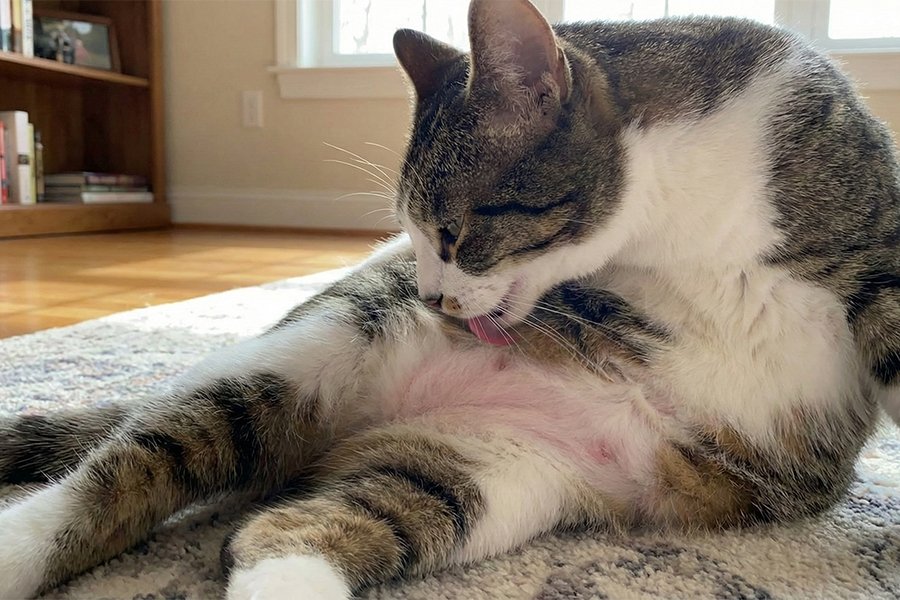
The location of hair loss can give useful clues. Hair loss near the base of the tail often suggests flea problems. Hair loss on the belly and inner thighs often suggests overgrooming, allergies, or stress. Circular patches on the face, ears, or paws can suggest ringworm or other infections.
While location alone can not confirm a diagnosis, it can guide you on what to check first when trying to understand why your cat is losing hair.
Hair loss becomes more concerning when it comes with other symptoms. Redness, swelling, scabs, open sores, flakes, bad smell, or bleeding usually mean the skin is inflamed or infected. Constant scratching, biting, or licking means your cat is uncomfortable.
Sudden hair loss that spreads quickly also needs attention. Behavior changes are also important. If your cat is hiding more, eating less, acting aggressively, or showing signs of pain, the hair loss may be part of a bigger health issue.
You should take your cat to the vet if the hair loss is sudden, severe, spreading, or not improving. You should also visit a vet if you suspect ringworm because ringworm can spread to humans and pets. If your cat has weight loss, appetite changes, low energy, or pain signs, do not delay.
Hair loss has many causes that look similar. A vet can save time and help your cat recover faster.
A vet typically begins with a thorough skin and coat exam, checking for flea dirt, mites, and signs of infection. If ringworm is suspected, the vet may perform skin tests such as skin scraping, tape tests, or fungal testing. In some cases, blood tests are necessary to check for hormonal or internal health issues.
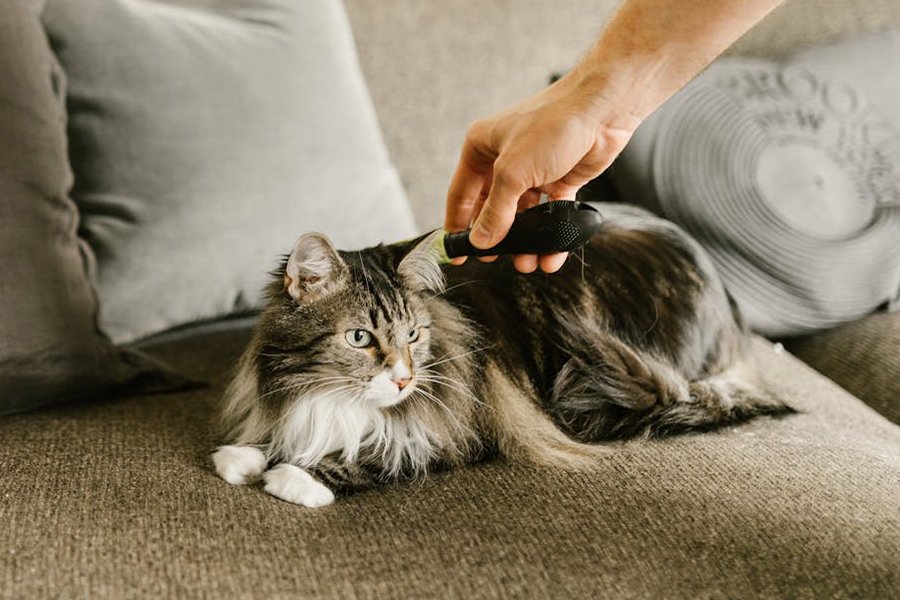
Accurate diagnosis is essential because the same bald patch could be caused by fleas, allergies, stress, infection, or pain. A proper diagnosis not only helps address the root cause but also prevents repeated flare-ups. For additional support, regular grooming with the right brush can aid in maintaining your cat’s coat health.
Treatment depends on the cause. If fleas are the cause, parasite control is needed, and often all pets in the home need prevention. If allergies are the cause, a diet change and vet-guided allergy management can help, sometimes in conjunction with medication to reduce itching.
If stress is the primary cause, adopting a calmer routine can help. Many cats improve with more play, mental stimulation, and stable daily habits. If infection is the cause, antifungal or antibacterial treatment is needed, and it must be safe for cats.
A very important rule is that you should not use human medicine or random creams on cats. Some products can be toxic and exacerbate the problem.
Prevention is easier than treatment. Regular grooming helps you notice skin problems early and removes loose fur safely. High-quality nutrition supports healthy skin and coat growth. Flea prevention is important even for indoor cats because fleas can enter homes in different ways.
Mental stimulation also matters. Cats need play, comfort, and a stable routine. When cats feel safe and active, they groom normally instead of excessively. Routine vet checkups help find internal health issues early, before they cause coat problems.
If you are searching why your cat is losing hair, remember this: hair loss is a signal, not a normal condition. Common causes include fleas, mites, allergies, overgrooming, stress, skin infections, poor diet, pain, and internal health issues. Early action makes a big difference.
By watching symptoms, improving nutrition, maintaining flea prevention, reducing stress, and getting veterinary support when needed, you can help your cat grow back a healthy, thick, and shiny coat.

WRITTEN BY
Md Hazrat Ali
A passionate pet blogger
and SEO content writer
At LovelyCatStore.com, some links are affiliate links. If you buy through them, we may earn a small commission at no extra cost to you. We participate in the Amazon Services LLC Associates Program, which helps us earn by linking to Amazon.com and related sites. Read more here…